
Blog
A Writer’s Guide to Fiction Genres (and Why They Matter More Than You Think)
Identifying a genre is solidifying your promise with your readers. It sets expectations about the kind of story you’re telling, the emotional ride the reader is about to depart on, and the ultimate narrative destination.
Whether you’re deep in your first draft or polishing your query letter, understanding genre will make your creative choices sharper and your publishing path clearer.

Get your butt in the chair! 😜 Keep momentum after November
I hope you’re all doing well with your goals, whatever they are. I’ve fallen off a bit, so I intend to keep this short and sweet…but y’all know I love my words. So we’ll see what happens.
It’s appropriate, though, that the momentum has flagged. Like many of us, I have big energy around the shiny new things and set out, totally gung ho, with plans and the best intentions. And then life and the real world intervene, and it gets harder to sustain. Streaks get broken. Those unanswered questions now need answers and they’re not easily found. I fall down my beloved research rabbit holes.

Don't agonize alone! Make and maintain connections to other writers
I’ll do another post or several on research, which is one of my favorite things but also an absolute time suck if you let it become such. I am blessed/cursed with needing to know certain things in order to be able to write forward—in this case, how my MC would have felt getting into and then traveling in this car on her way to meet her soon-to-be fiance’s family for the first time. Sometimes I can throw a TK in and keep going; other times not so much.

It feels so real, can you taste it? Elevate your writing with the five senses
As of this writing (I do sometimes manage to get these done ‘ahead’ of schedule), I’m keeping on top of my word count and having fun taking the idea of a scene (from my outline), which is usually one or two sentences long, and translating it into hundreds or a few thousand words. I’m remembering what it is like to inhabit a new MC’s head, when they are frequently surprising you, not only by the things they say and do, but by the little things like gestures, facial expressions, and learning how they interact with the world around them.
Unleash the writers! Let the word storms commence!
A couple of weeks ago, I suggested writing a very high level synopsis of your story—where it begins, where it ends, and a little bit of detail on how your MC gets from point A to point B. Now we’re going to expand upon that, a little or a lot.

Who do you think you are? (the important character questions to ask)
Who is telling the story?
The simplest answer is your main character, right? But that’s not always the case. Plenty of books have multiple point of view characters, by which I mean the reader gets to experience the story through the eyes of more than one character. This is often, but not always, done by switching point of view (POV) from chapter to chapter.
So there’s your first choice: are you going to tell the story through multiple points of view or just one?

More powerful questions to answer about your novel! 🤓
How goes the planning? Does your brain hurt after last week? 😅
I should have mentioned that these questions are important for everyone, not just folks planning to start a new novel. If you’re in the middle of drafting or revising, these questions are just as relevant and answering them can help you gain clarity. So don’t skip them just because you’re already in the thick of things.

Three important questions to ask yourself about your novel 🤔
Did you make your November writing (or revising) plan? Have you blocked out time on your calendar and told your friends and family that this time is non-negotiable? If you did, AWESOME! If you didn’t, get after it. There’s still time.
As promised, this week we’re going to take a look at a tried and true planning tool that I use in both my own writing and my coaching practice: the Blueprint for a Book.

Happy Prep-tober: Let's get ready to NaNo! 🎃
Confession time: I’ve done NaNo a few times but only technically ‘won’ it once, and that was after some truly marathon sessions in the last week of November. No joke, I wrote more than 20,000 in that week. 😪 (For those who don’t know, ‘winning’ NaNoWriMo means writing 50,000 words over the course of the month.)
I’m fortunate that my small city apartment means I’ll never be tagged as a Thanksgiving host, not to mention my husband’s business means that everyone expects me to show up with wine and cheese—and I am happy to oblige!

The next chapter: help to write your best book
Those of you that know me know that promoting myself and my work is my LEAST favorite thing to do. I’m the person that stuck my tongue out at my guests at my own wedding as I was walking down the ‘aisle’. (There is video proof!) Attention = not my jam.
But! Much like how your writing will never find an audience if you don’t ever actually pitch or publish it anywhere, if I never talk about what I do as a coach and how I do it, it might mean that I never get to work with writer you! And that would be a bummer, because I really love helping writers. That is very much my jam.

Yarrr, Happy International Talk Like a Pirate Day! 🏴☠️
One of the things that plagues most of us at some time or another is that we’re afraid we’re not sticking to the plan or meeting expectations. Every one of my clients has at some point apologized to me for not getting ‘enough’ done, not meeting a deadline, or for taking a break when they need it.

Happy New Year! 🥳 😂 Let's celebrate and get writing!
Commit to a writing practice, whatever that looks like for your life.
Very few of us have the luxury of devoting hours of time each day to writing. We have to fit it in amongst all our other obligations. We do it because we love it, because we have something to say that we want to share with the world, and because we feel like words and stories are important.

Easily achievable book things to do when it's too hot to write 🥵
I know there are people who thrive in the heat. I am not one of them—when the temp rockets into the 90s (and with the attendant humidity soup we get here) I wilt like an unwatered plant and it can be hard to squeeze any good words out of my brain.
So I thought it might be useful to share some ways to keep working on your book without actually working on your book, if your creative juices have sizzled away.

How project management frameworks can help you plan - and finish! - your novel
Greetings from Project Management-land, where I lived much of my life last month. While glancing longingly at my WIP Scrivener file as I sorted through prerequisite tasks, scheduling hours, and figuring out if I could clone some co-workers, I also thought a bit about the role of project management in a complex writing project—like, say, writing a novel?!
Stick with me - I’m going to talk a tiny bit about PM work and then relate it to writing.
There are two project management major frameworks (at least in the digital world that I inhabit): Waterfall and Agile.

Vampires and poisons and spies, oh my! thrilled to be at thrillerfest 🔪
Project management-land has swallowed me up lately but fortunately I had a quick break in order to celebrate book things with my friend and fellow coach Samantha Skal at ThrillerFest in NYC.

How to keep your eyes on the prize 🏆 Accountability for writers
I’ve been thinking a lot about project management lately. As you may know, I accidentally fell into PM work as part of my editorial job way back in the day and as it turns out, there are a lot more opportunities for project managers than there are for editors. Go figure!
When I first started my book coaching business, my mentor Jennie Nash encouraged me to lean into these skills as part of my coaching toolkit. I had left my full-time PM job in 2016, being totally burned out on the gig (despite loving the company I was working for). Even 4 years later, I wasn’t ready to dip my toes back into those waters, no matter how much it might have helped me.
I admit: I've been cheating on my book.
Hi friends! It’s been a while hasn’t it? I went on a little vacation that in real life was a wonderful week but in weekly dispatch life has extended itself a wee bit. So it goes.
I think—I know—why I haven’t had much to say.
A couple of months ago, I found out that someone else has written a book about my protagonist. It’s going to be published next year to great fanfare (or so the press release claims). There is an Important Agent involved.
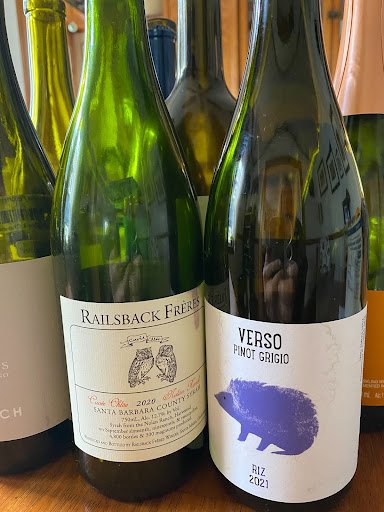
This was a gut punch. There were tears. My husband brought me wine. My coach and friends did their best to rally me. I asked for and received more wine.
Just to be clear, there is nothing hinky going on. I don’t think this other writer somehow ‘stole’ my idea. Except for an occasional suspect email scam, that isn’t really a thing.
In a certain way, it’s validation that my protagonist’s story is interesting and needs to be out in the world. And I wholeheartedly agree that, while our novels are based on the life of the same person, in reality they are two totally different books. She couldn’t write my version; I couldn’t write hers.

You’re Not Ready to Query
Put your best book forward! How to make sure you're ready to query
One of the most common things I have heard (and read) from agents is that a huge percentage of the work that comes across their desk, especially from the slush pile (which is where we all go unless you have some direct line or special introduction), is that the work just isn’t ready.
Let’s back up a second to look at the process:
(If your goal is to self-publish your book, or work with a vanity or hybrid press, or if you’re writing for the sheer pleasure of it, you may think today’s post is not for you but most of this advice is just as valid—it’s just not quite as critical because you have more control over the process.)

Keeping the Romance Alive -How To Date Your Novel 😍
I confess, the idea behind this came from a writing class I took with the wonderful Michele Ferrari, and when she shared it with us, it hit me particularly hard (in a good way).
Very broadly, we probably consider our works-in-progress in one of two ways
As work, a project that we have committed ourselves to and are determined to see across the finish line because of that commitment
A hobby, a creative pastime, something that we’re doing for the joy of itMaybe it’s just me, but before Michele shared this idea, I had never thought about the fact that I was in a relationship with my novel. And like any relationship, there would be ups-and-downs. It would need to be cultivated, nurtured. I would love it, I would hate it.

Beware the bland book on the back of the door! 😱
This takes me back, all the way to 2018, when I had what I was sure was the final iteration of my outline. 🤣🤣🤣 To paraphrase Leslie Knope: Kerry, you beautiful tropical fish.
No one gets it 100% right the first time. Writing a novel is a process, not an event.
What I really had, I know now, was a bunch of plot points. Their only connection was that they tracked the events of my protagonist’s life. There was no real meaning, nothing juicy–just the dreaded ‘and then this happened’. And, friends, I wrote 145K words worth of ‘and this this happened’. Blerg.